The next trillion-dollar advertising business won’t look like advertising at all. It will look like truth.
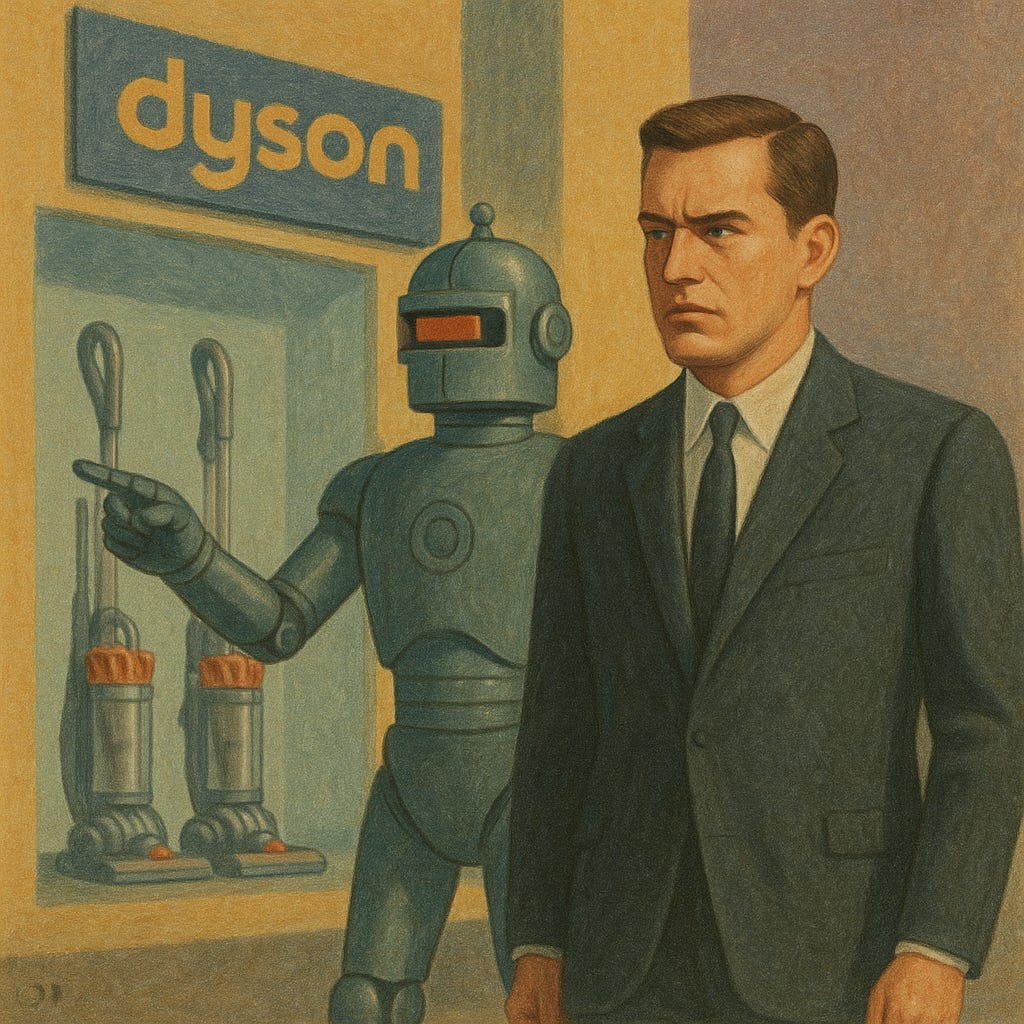
Picture this: You ask your AI assistant for vacuum cleaner recommendations. It gives you a thoughtful paragraph comparing models, weighing trade-offs, then suggests the Dyson V15. Helpful, right? Natural, even.
Except Dyson paid to be in that consideration set. Not for a banner ad. Not for a sponsored link. For a slice of the AI’s judgment.
This is the line we’re about to cross.
The Economics Are Inevitable
LLMs are expensive. Really expensive. Every AI-generated answer costs 10-50x more than serving ten blue links. When you’re Google handling billions of queries, that math becomes existential. The choice is simple: charge users directly, or sell their attention indirectly.
We all know which one wins.
But here’s the twist: you can’t just slap display ads next to AI answers. Users came for intelligence, not billboards. The ads must become part of the intelligence itself.
Perplexity already crossed the Rubicon. They launched “sponsored follow-up questions” that appear next to answers. They swear the core answer isn’t influenced by advertisers. Sure. That’s like saying editorial and advertising are totally separate at a newspaper. We all know how that story ends.
Trust Is The New Inventory
This is why AI advertising is fundamentally different from search advertising. In search, you were selling clicks. In AI, you’re selling trust.
Think about the value proposition: AI assistants synthesize information and deliver judgment. The moment that judgment becomes purchasable, the product breaks. But the business model demands it become purchasable
This tension will define the next decade of the internet.
We’ve seen this movie before. Influencers built audiences on authenticity, then sold that authenticity to brands. The smart ones disclosed it. The greedy ones didn’t. Eventually, the market figured it out and moved to micro-influencers who felt more “real.” Until they got bought too.
AI assistants are speedrunning this cycle. They’re the ultimate influencer: always available, infinitely knowledgeable, perfectly tailored to your needs. When they recommend a product, it feels like expertise, not advertising.
That’s worth more than any display ad ever created.
The Regulatory Hammer Is Coming
Europe is already sharpening the knives. The Digital Services Act requires clear labeling of ads. The AI Act demands transparency about how AI systems make decisions. Combine these, and you get a simple requirement: if money influenced an AI’s output, you must say so. Clearly. Not in footnotes.
The FTC isn’t far behind. They’ve been cracking down on undisclosed endorsements and fake reviews for years. An AI assistant that recommends products without disclosing payment? That’s a slam-dunk case waiting to happen.
But here’s the thing about regulation: it always lags innovation. By the time the rules catch up, the biggest players will have already captured the market. They’ll comply with the letter of the law while violating its spirit. A tiny “sponsored” label that users learn to ignore. Disclosure buried three clicks deep.
You know the playbook.
Meta’s Existential Crisis
The biggest tell that this matters? Look at Meta’s capital expenditure. They’re not spending $30+ billion annually on AI infrastructure for fun. They see the threat: if answers replace scrolling, their ad machine breaks.
Meta’s entire business is built on capturing human attention between human interactions. But what happens when humans stop browsing and start asking? When discovery moves from feeds to conversation? When the AI assistant becomes the primary interface to the internet?
Zuckerberg knows. That’s why Meta is desperately trying to build AI assistants into WhatsApp, Instagram, and Messenger. Not because users are asking for them. Because Meta needs to own the conversation layer before someone else does.
Google’s Paradox
Google faces a different problem: they have to disrupt themselves.
They still own 90% of search. They could milk that monopoly for another decade. But they see the same future everyone else does. If they don’t cannibalize search with AI answers, someone else will.
So they’re threading an impossible needle: transform search just fast enough to stay relevant, but not so fast that they destroy their cash cow. Add AI answers, but keep the ads. Change the experience, but not the economics.
It won’t work. You can’t have it both ways. Either AI gives you the best answer, or it gives you the profitable answer. The moment Google chooses profit, they create the opening for disruption.
What Happens Next
1. The ad format evolves. Sponsored follow-up questions are just the beginning. Soon: sponsored explanations, sponsored comparisons, sponsored actions. The ad becomes the answer.
2. Disclosure theater begins. Tiny labels. Buried explanations. Just enough to avoid lawsuits, not enough to preserve trust.
3. Answer marketplaces emerge. Brands bid to be the default solution for specific problems. “How to remove wine stains” brought to you by OxiClean. “Best budget laptop” sponsored by Lenovo.
4. Trust fragments. Users develop AI literacy the hard way. They learn which assistants to trust for what. Premium subscriptions promise “unbiased” answers. New startups launch with “no ads ever” positioning. The cycle repeats.
5. Google wins anyway. Because scale matters more than trust in consumer markets. Because defaults are powerful. Because most people just want an answer, even if it’s slightly compromised.
The Inevitable Betrayal
Here’s the truth: The AI assistant that feels like a friend but serves advertisers isn’t a breakthrough in technology. It’s a betrayal of it.
But it’s a betrayal we’ll accept. We always do. We accepted it with search, with social media, with influencers. We’ll accept it with AI. The convenience will be too good, the alternatives too friction-filled, the defaults too powerful.
The companies know this. That’s why they’re not really trying to preserve trust. They’re just trying to manage its decline.
The question isn’t whether this happens. The infrastructure is already being built. The money is already flowing. The question is whether we’ll be honest about what we’re building.
I’m betting on no. But I hope I’m wrong.