I spent last weekend in Vegas. Walking through the Bellagio at 3 AM, I finally understood something that had been nagging at me for years. The casino floor was carefully engineered: no clocks, no windows, maze-like pathways that always led back to slot machines. Then I pulled out my phone to check Twitter, and it hit me.
I wasn’t escaping the casino. I was carrying it with me.
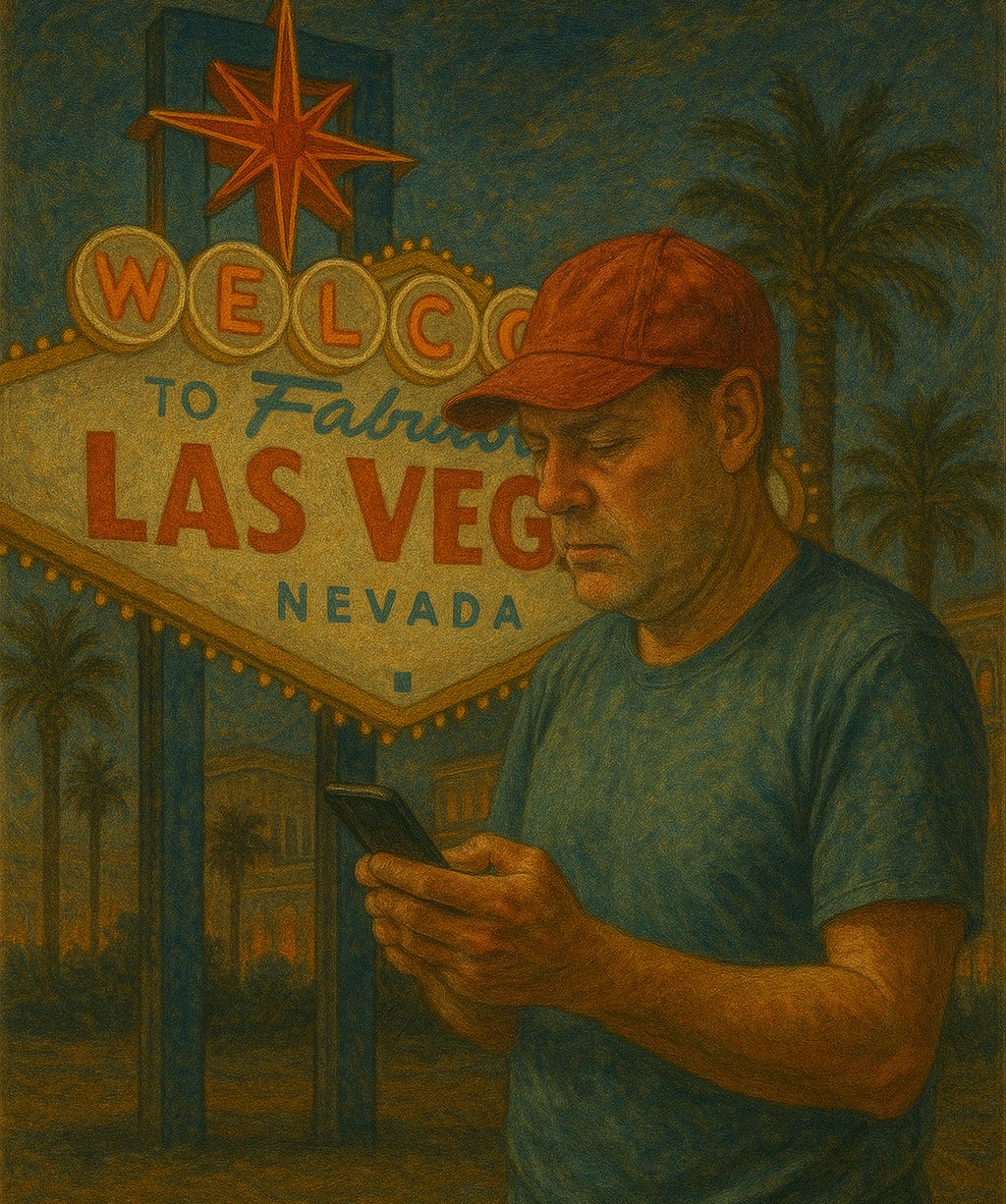
The Realization
What struck me wasn’t that tech companies borrowed from casinos. It was how completely they’d surpassed them. The Bellagio can only exploit people who physically show up. TikTok’s algorithm learns from two billion users simultaneously.
Standing there, watching people hunched over slot machines, I recognized the posture. It’s the same one I see on every subway car, in every coffee shop. Heads down, thumb scrolling, occasionally pulling down to refresh. The only difference is the size of the screen.
The Business Model Evolution
Vegas discovered something brilliant: give away drinks to keep people betting. The free cocktails aren’t generosity; they’re a cost of acquiring behavior. Lower inhibitions, impair judgment, keep them at the tables. The house makes it back on bad bets.
Tech platforms perfected this model. Facebook is “free” like casino drinks are free. You’re not the customer; you’re the product. While you’re enjoying your free social network, you’re generating behavioral data worth billions. Every like, share, and scroll trains algorithms that predict and shape future behavior.
The parallel is exact: casinos need you gambling, platforms need you scrolling. Both discovered that giving away something “free” generates far more value than charging admission. The only difference is that hangovers fade. Data is forever.
Variable Rewards at Scale
Watching people at slot machines, I remembered Skinner’s research: rats pressed levers most frantically when rewards came unpredictably. Vegas implemented this perfectly. You never know when the next pull wins.
But social media perfected it. The pull-to-refresh gesture literally mimics a slot machine handle. Unlike slots, though, the rewards adapt. The algorithm learns what makes you pull harder: political outrage? Cat videos? Your ex’s updates? Then it delivers those rewards on a schedule optimized for addiction.
Here’s what made me uncomfortable: slot machines are dumb. Same odds every pull. Social media algorithms get smarter with every interaction. They don’t just exploit existing weaknesses; they create new ones.
The Dystopia We’re Building
China’s Social Credit System shows the endgame: gamification meets state power. Your score determines everything from loan rates to travel rights.
But standing in that casino, I realized we’re building the same system through market forces. Credit scores, Uber ratings, LinkedIn endorsements, Instagram followers: we’ve created a distributed social credit system. No central authority needed; we police each other.
The Builder’s Dilemma
Flying home, I kept thinking about those maze-like casino pathways. Every turn designed to keep you inside, every angle calculated to prevent escape. As someone who builds technology, this haunts me.
The playbook for exploiting human psychology is well-documented. Variable rewards work. Infinite scroll works. Dark patterns work. But what works isn’t always what we should build.
The Question That Matters
Some platforms are trying different models. BeReal’s once-daily photos. Substack’s direct relationships without algorithmic feeds. They’re betting users will eventually seek healthier alternatives.
I’m not sure they’re right. But after seeing Vegas’s mechanical manipulation and recognizing its digital descendants in my pocket, I hope they are.
Because once everyone lives in the casino, there’s nowhere left to go when you want to leave. The house always wins.
Maybe it’s time to build a different house.